
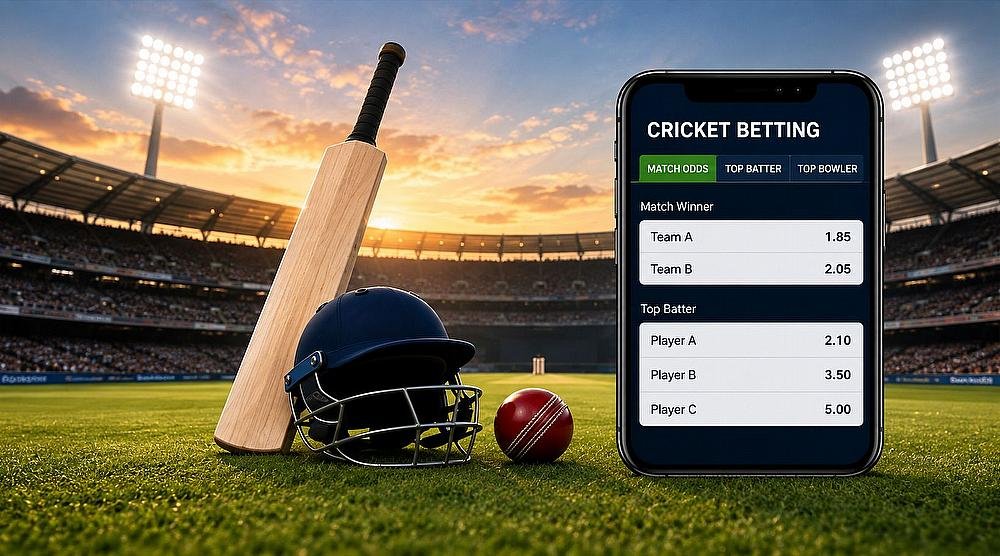
Live betting has changed the way people follow sporting events. Instead of making a prediction before a match begins, in-play betting allows users to monitor events as they happen and react to changing markets and odds.
For users exploring Gold 365 live markets and odds, understanding how prices move is more important than simply looking for a higher number. Match momentum, wickets, goals, player performance, time remaining and changes in market expectations can all influence live prices.
This guide explains several analytical approaches to live markets, while emphasizing that betting involves financial risk and no strategy can guarantee a profit.
What Are Gold365 Live Markets?
Live markets are betting markets that remain available while a sporting event is taking place. Unlike pre-match markets, live odds can change frequently as new information becomes available.
For example, in a cricket match, the market can react to:
- Runs scored
- Wickets lost
- Current run rate
- Required run rate
- Number of overs remaining
- Batter and bowler performance
- Match conditions
- Changes in the expected outcome
The same principle applies to football, tennis and other sports. A goal, red card, injury, break of serve or other significant event can cause odds to move rapidly.
1. Understand Implied Probability
One of the most useful concepts in odds analysis is implied probability.
For decimal odds, a simple calculation is:
Implied probability = 1 ÷ decimal odds × 100
For example, odds of 2.50 correspond to an implied probability of approximately 40%.
This does not mean the outcome has a 40% chance of occurring. It represents the probability implied by the quoted price before considering factors such as bookmaker margin.
Understanding this relationship helps bettors think about prices rather than simply asking whether a particular team or player will win.
2. Watch How Live Odds Move
Live odds are dynamic. A price can change because the underlying probability of an outcome has changed.
Consider a cricket chase. If a team needs 60 runs from 30 balls with several wickets remaining, the market may assign a different price than it would after the team loses two wickets in quick succession.
The important analytical question is not simply:
“Did the odds go up or down?”
Instead, consider:
“What event caused the market to move?”
This encourages evidence-based analysis rather than reacting emotionally to a rapidly changing number.
3. Analyze Match Momentum Carefully
Momentum can be useful as a descriptive concept, but it should not be treated as a guaranteed predictor.
In cricket, useful indicators can include:
- Recent scoring rate
- Wickets in hand
- Partnership stability
- Required run rate
- Bowling changes
- Overs remaining
In football, analysts might consider:
- Shots and chances
- Possession patterns
- Cards
- Substitutions
- Injuries
- Scoreline and time remaining
The objective is to combine several pieces of information rather than relying on one statistic.
4. Compare the Current Price With the Situation
A common mistake in live betting is concentrating exclusively on the displayed odds.
Instead, consider the relationship between the price and the current match situation.
For example, suppose a cricket team’s odds shorten after a strong over. Ask:
- Did the scoring rate genuinely improve?
- Were the runs produced against a key bowler?
- Are important batters still at the crease?
- How many overs remain?
- Has the required run rate changed significantly?
This type of analysis can help separate meaningful market changes from short-term fluctuations.
Know More: Gold365 Multiple Betting Markets Explained
5. Avoid Chasing Rapid Market Movements
Live betting can create pressure because markets may change within seconds.
A bettor who sees odds moving against their original expectation may be tempted to place another wager simply to recover a previous loss.
This is commonly described as chasing losses, and it can increase financial risk.
A more disciplined approach is to establish limits before betting begins and accept that some predictions will be incorrect.
A missed opportunity is generally less costly than making an impulsive decision outside a predetermined plan.
6. Use a Predefined Bankroll
Bankroll management is one of the most important parts of responsible betting.
Rather than deciding stake sizes emotionally, establish a betting budget that you can afford to lose.
A simple framework is to use a consistent percentage of the available betting bankroll for individual wagers. The exact percentage is a personal risk-management decision, and there is no universally correct staking formula.
Avoid increasing the stake simply because a previous bet lost.
7. Understand Market Liquidity and Timing
Not every live market behaves in exactly the same way.
Popular matches can attract more attention and produce frequent price changes, while less-followed markets may behave differently.
Timing also matters. Prices can change rapidly immediately after important events.
During these moments, it is particularly important to check whether the market is still accepting the selected price and whether the underlying event has changed.
8. Keep a Betting Record
One of the simplest ways to improve analytical discipline is to maintain a record.
A useful spreadsheet can include:
| Date | Sport | Market | Odds | Stake | Reason | Result |
|---|---|---|---|---|---|---|
| 12 Sep | Cricket | Match Winner | 2.20 | 1 unit | Match situation | Win |
| 15 Sep | Football | Match Market | 1.85 | 1 unit | Statistical analysis | Loss |
Importantly, a small sample of wins does not prove that a strategy works. Longer-term records provide more useful information.
9. Don’t Confuse Short-Term Results With Skill
A bettor can make a well-reasoned decision and still lose.
Likewise, an impulsive wager can win.
This is why evaluating a strategy purely by its recent results can be misleading. Random variation can produce winning or losing streaks.
Instead, assess:
-
Whether your reasoning was consistent
-
Whether you followed your staking rules
-
Whether your assumptions were supported by available information
-
Whether you maintained accurate records
-
Whether your betting activity stayed within your financial limits
10. Build a Simple Live-Market Checklist
Before placing an in-play wager, consider using a short checklist:
Match context: What is happening right now?
Price: What odds are currently available?
Probability: What probability does that price imply?
Evidence: What statistics or match events support your assessment?
Risk: How much could you lose?
Discipline: Would you still place the wager if your previous bet had not lost?
If the decision is primarily emotional, waiting may be preferable to acting immediately.
Gold365 Live Odds: What Should You Monitor?
For users analyzing live markets, several information points can be particularly relevant.
Cricket
- Current score
- Wickets remaining
- Overs completed
- Required run rate
- Recent scoring rate
- Batting partnership
- Bowling changes
Football
- Current score
- Match time
- Shots and chances
- Cards
- Substitutions
- Injuries
- Recent attacking pressure
Tennis
- Current set and game score
- Service position
- Break points
- Recent service performance
- Player fatigue indicators
- Match momentum
The most useful data will depend on the sport and market being analyzed.
Common Mistakes in Live Betting
Several mistakes can undermine an otherwise structured approach.
Betting because of emotion
Supporting a favorite team can make objective analysis more difficult.
Chasing losses
Increasing stakes after losing can rapidly increase exposure.
Overreacting to one event
A single goal, wicket or point does not necessarily determine the eventual outcome.
Ignoring the price
Correctly predicting an outcome is not the same thing as identifying a worthwhile price.
Betting without limits
Live markets can encourage repeated decisions, making predetermined financial limits particularly important.
Final Thoughts
Gold365 live markets and odds can be analyzed using a combination of probability, match statistics, market movement and disciplined bankroll management.
The key is to treat live betting as a risk-management exercise rather than a guaranteed way to make money. Understanding implied probability, identifying why odds move, keeping detailed records and avoiding emotional decisions can create a more structured approach to analyzing in-play markets.
Most importantly, only wager money you can afford to lose, follow applicable laws and regulations in your location, and consider using responsible-gambling tools if betting stops being recreational.